
Why Winter Storms Hit NJ Homes So Hard
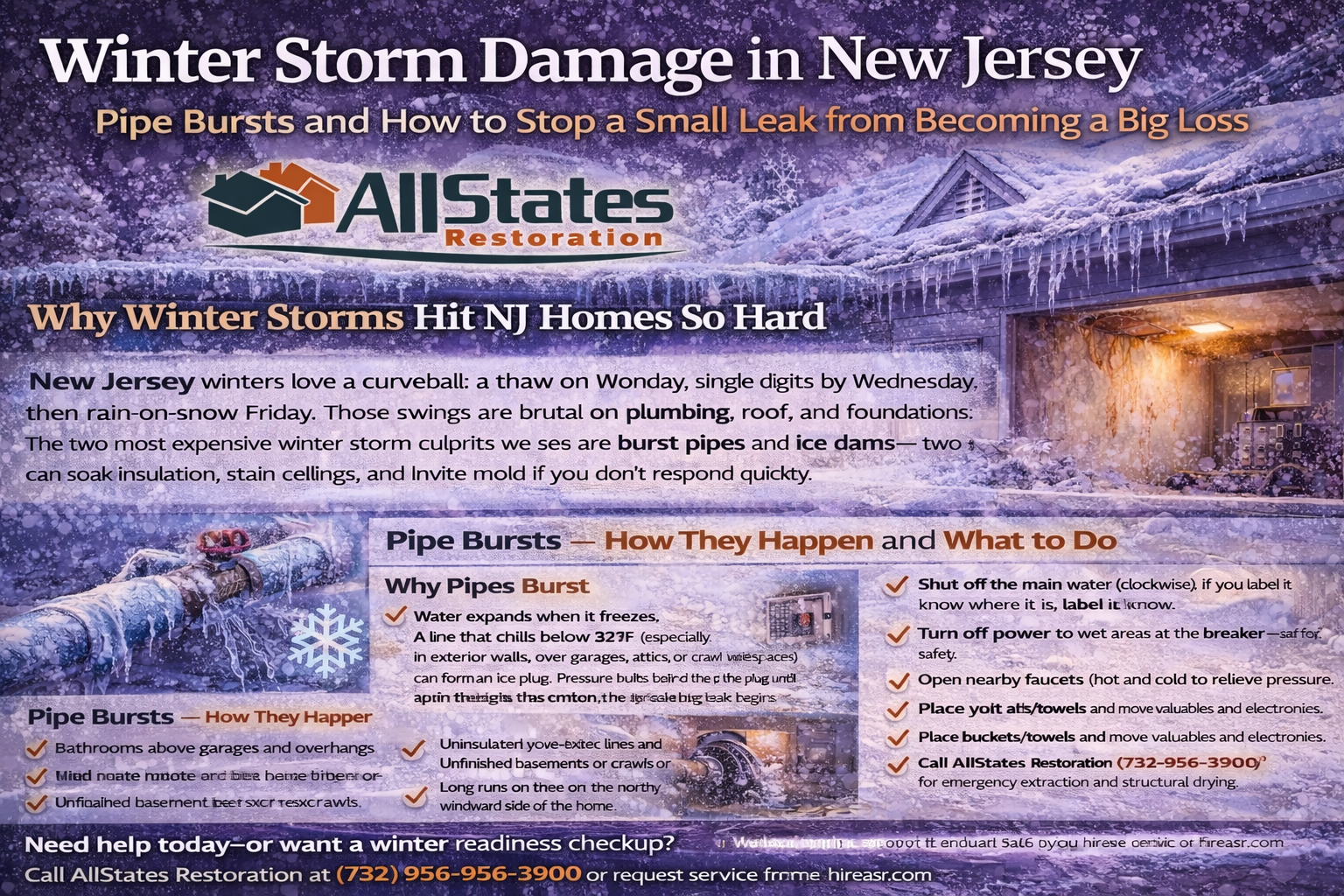
New Jersey winters love a curveball: a thaw on Monday, single digits by Wednesday, then rain-on-snow Friday. Those swings are brutal on plumbing, roofs, and foundations. The two most expensive winter storm culprits we see are burst pipes and ice dams—both can soak insulation, stain ceilings, and invite mold if you don’t respond quickly.
Pipe Bursts — How They Happen and What to Do
Why Pipes Burst
Water expands when it freezes. A line that chills below 32°F (especially in exterior walls, over garages, attics, or crawl spaces) can form an ice plug. Pressure builds behind the plug until a joint splits. Often, the big leak begins when the pipe thaws, so you may not see water until temperatures rise.
Common NJ hotspots:
- Bathrooms above garages and overhangs
- Kitchen sinks on exterior walls (closed cabinets trap cold)
- Uninsulated hose-bibb lines and unfinished basements/crawls
- Long runs on the north/windward side of the home
First 10 Minutes
- Shut off the main water (clockwise). If you don’t know where it is, label it today.
- Turn off power to wet areas at the breaker—safety first.
- Open nearby faucets (hot and cold) to relieve pressure.
- Place buckets/towels and move valuables and electronics.
- Call AllStates Restoration (732-956-3900) for emergency extraction and structural drying.
Do not use an open flame to thaw lines. Warm slowly with a hair dryer or safe space heater if needed, keeping 3 ft clearance.
Winter storms don’t have to win. With smart prevention, a clear first-hour plan, and a professional dry-out, you can turn a burst pipe or ice dam into a short detour instead of a season-long headache. If you’re looking at a stain, a puddle, or a suspicious drip, act now—minutes matter.
Need help today—or want a winter readiness checkup?
Call AllStates Restoration at (732) 956-3900 or request service at hireasr.com.
We’ll stop the water, dry the structure, document the loss, and get your home back to warm, safe, and worry-free—fast.
Leave A Comment