
Introduction: Cold Snaps, Big Headaches
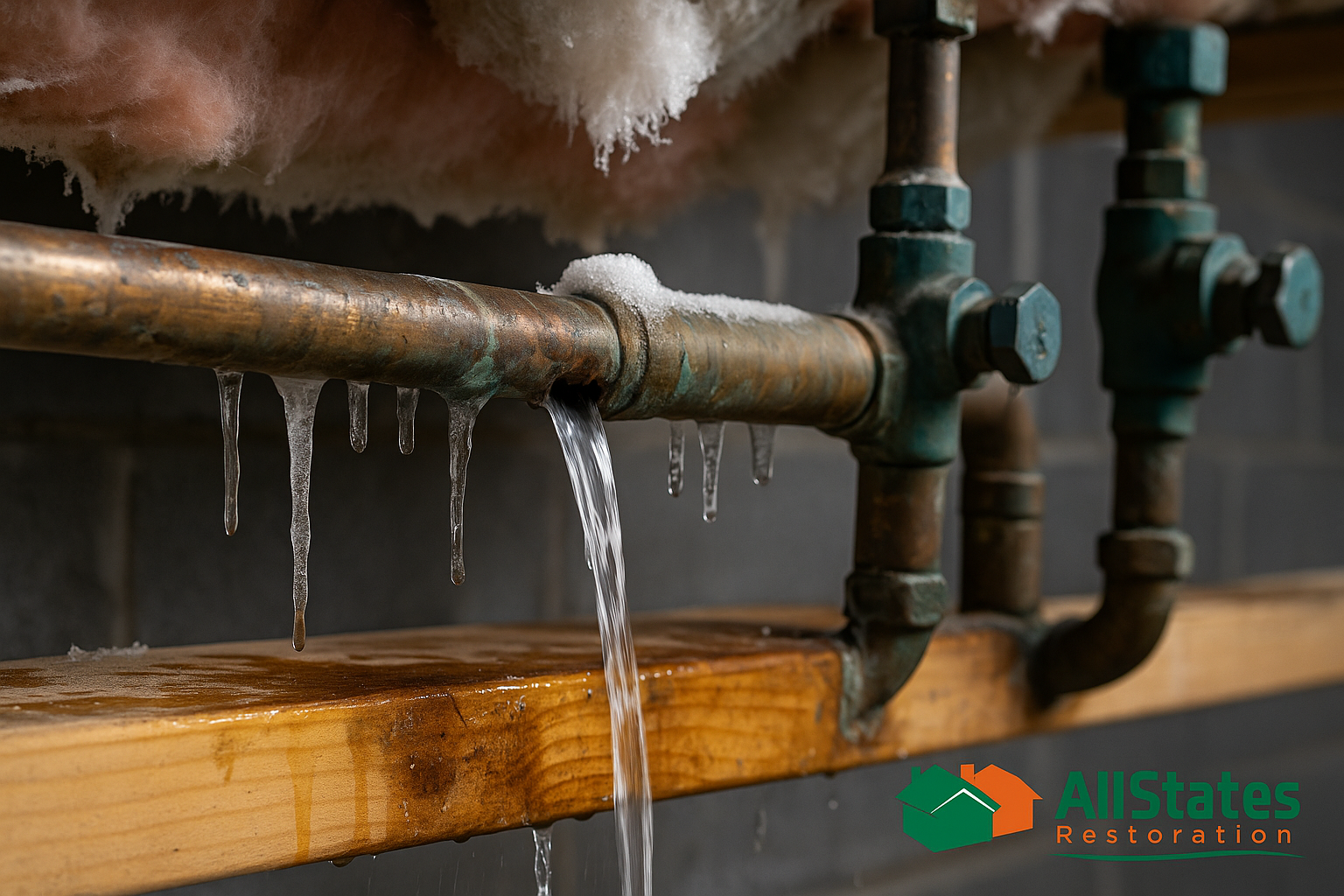
New Jersey winters are unpredictable—mild temperatures one week, single digits the next. These rapid temperature swings are tough on plumbing, roofs, and foundations. Just one burst pipe can release hundreds of gallons of water in minutes, flooding basements, damaging ceilings, and creating the perfect conditions for mold.
This guide explains how to winter-proof your plumbing, recognize risk early, and act fast if pipes freeze—so a cold snap doesn’t turn into a costly emergency.
Why Pipes Freeze (and Burst)
Water expands by about 9% when it freezes. When that expansion happens inside a closed pipe, pressure builds rapidly until the pipe splits—often at a weak joint or fitting. In many cases, the pipe doesn’t fully fail until the ice plug begins to thaw, allowing water to rush through cracks that suddenly become major leaks.
High-Risk Conditions in NJ Homes
-
Uninsulated pipes in attics, garages, crawl spaces, exterior walls, and overhangs
-
Long pipe runs on the north or windward side of the house
-
Drafts near sill plates, rim joists, hose bibbs, and dryer vents
-
Vacant or seasonal homes kept at low temperatures
Winter Plumbing Prevention Plan
1) Insulate & Air-Seal Cold Zones
-
Wrap exposed copper or PEX pipes with foam insulation and seal seams with tape
-
Air-seal gaps around hose bibbs, sill plates, and wire or pipe penetrations using caulk or spray foam
-
Insulate rim joists and cold cavities above garages
2) Protect Exterior Faucets
-
Install frost-free sillcocks or use insulated faucet covers
-
Disconnect garden hoses before the first hard freeze—trapped water is a burst waiting to happen
-
Verify interior shutoff valves for hose lines and drain any bleeder ports
3) Keep Heat Where Pipes Live
-
Maintain 55–60°F minimum in seldom-used areas such as basements or bonus rooms
-
Open cabinet doors under sinks on exterior walls during cold snaps
-
If plumbing runs above a garage, keep the garage closed and consider a low-wattage heater (placed safely)
4) Let Vulnerable Pipes Drip
When temperatures drop into the teens or wind chills are extreme, allow at-risk faucets to drip slightly. Moving water resists freezing and relieves pressure inside the pipe.
5) Use Smart Technology as a Safety Net
-
Place Wi-Fi leak sensors under sinks, behind toilets, near the water heater, and by the main shutoff
-
Install an automatic water shut-off valve that closes when abnormal flow is detected
-
Monitor indoor humidity (ideal range: 40–55%) to reduce condensation and mold risk
Ice Dams: The Other Winter Water Leak
Ice dams form when heat from the attic melts roof snow, which refreezes at colder eaves. Water backs up under shingles and can leak into ceilings and walls. Proper attic insulation and ventilation help reduce this risk.
If a Pipe Might Be Frozen
Warning Signs
-
Little or no water from one faucet while others work
-
Frost on pipes, bulging pipe sections, or unusual drain odors
What to Do
-
Open the affected faucet (hot and cold) to relieve pressure
-
Warm the pipe slowly using a hair dryer or portable heater—start near the faucet and move toward the frozen section
-
Keep heaters clear of combustibles
-
Never use an open flame or blowtorch
If you can’t locate the frozen section or suspect a pipe has split:
-
Shut off the main water supply
-
Open lower-level faucets to drain remaining water
-
Call a licensed plumber
If water is already flowing where it shouldn’t:
-
Shut off electricity in the affected area
-
Protect valuables
-
Call AllStates Restoration at 732-956-3900 for emergency water extraction and structural drying
Burst Pipe Response Plan: Minutes Matter
-
Call AllStates Restoration immediately at 732-956-3900
-
Save AllStates Restoration and your plumber in your phone before winter starts
Why NJ Homeowners Choose AllStates Restoration in Winter
-
Rapid 24/7 response during freezes and storms
-
IICRC-Certified Technicians
-
Water Restoration (WRT/ASD)
-
Mold Remediation (AMRT)
-
Fire & Smoke (FSRT)
-
-
Advanced diagnostics first: thermal imaging, pin and pinless moisture meters, hygrometers
-
Insurance-ready documentation: photo logs and daily moisture readings
-
Turnkey service: extraction, structural drying, antimicrobial treatment—one accountable team
Conclusion & Call to Action
Freezing temperatures don’t have to mean flooded rooms. A weekend of preparation, a few targeted upgrades, and a clear response plan can protect your home all winter long.
Want a Quick Winter Water-Risk Checkup?
📞 Call AllStates Restoration at (732) 956-3900
🌐 Visit: hireasr.com
Leave A Comment