
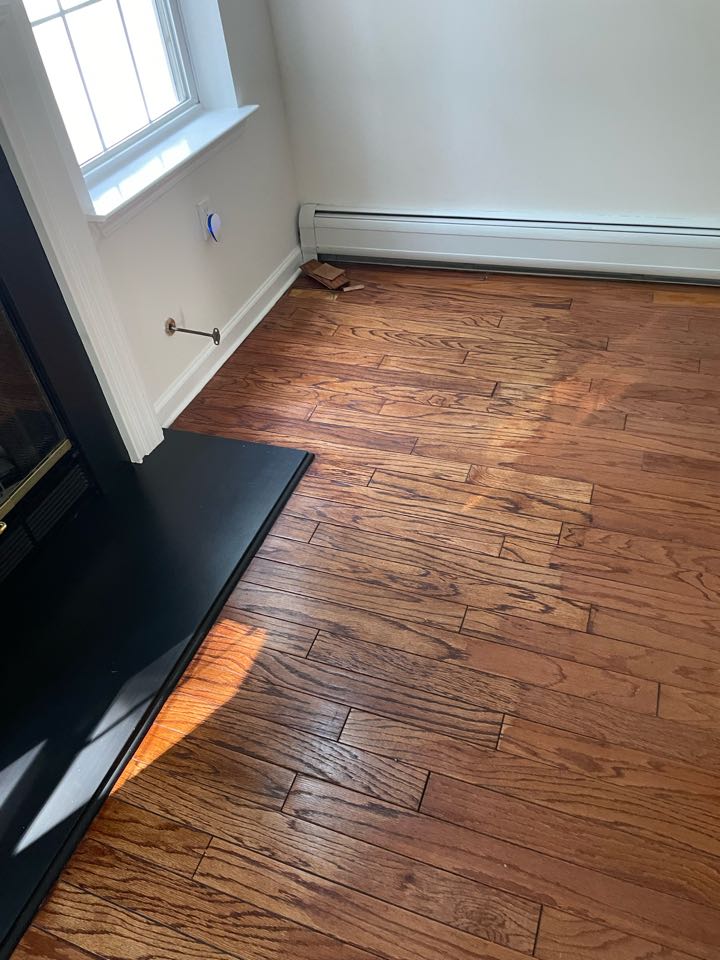
Spill, leak, or flood on hardwood? Learn when to dry, when to replace, timelines, costs, and pro strategies—by AllStates Restoration (Englishtown, NJ).
The Clock Is Ticking on Wet Wood
Few things punch the gut like seeing ripples in your hardwood after a dishwasher leak or burst pipe. With fast action and the right drying strategy, many floors can be saved—especially in the first 24–72 hours. This guide from AllStates Restoration explains how to tell cupping from crowning, which floors are salvageable, what professional drying looks like, and how to avoid mold and long-term buckling.
Wood 101: Why Floors Warp (and Which Way)
| Term | What You’ll See | Cause | What It Means |
|---|---|---|---|
| Cupping | Board edges higher than center (U-shape) | Moisture from below the board | Often reversible with controlled drying |
| Crowning | Board center higher than edges (∩-shape) | Surface dried too fast while wood below stayed wet | Usually not reversible; often needs repair |
| Buckling | Boards lift off the subfloor | Severe saturation or adhesive failure | Replacement and subfloor work likely |
Time, water category (clean vs. contaminated), finish type, and how quickly drying starts all influence outcomes.
First 6 Hours
Call AllStates Restoration at 732-956-3900
We can help:
- Stop the source (close fixture valve or main).
- Document photos/video before you move anything.
- Extract standing water—towels for small spills; wet vac for larger.
- Elevate furniture on blocks; remove area rugs (dyes can stain).
- Rapid extraction and balanced drying are critical.
Don’t:
- Blast heat or space heaters directly on the floor (promotes crowning).
- Run household fans without managing humidity (can spread moisture/vapor).
- Assume it’s “just the surface”—subfloors and cavities often hold more water than you expect.
Inside a Professional Hardwood Drying Setup
1) Moisture Mapping (Top, Core, and Subfloor)
We check:
- Wood moisture content (MC) at multiple depths
- Subfloor readings (plywood/OSB) and joist moisture
- Ambient RH/temperature (to set a safe drying profile)
2) Extraction & Cavity Access
- Remove free water with truck-mount wands.
- Pull a few boards or baseboards (as needed) to create relief and airflow paths.
3) Floor-Drying Mats & Directed Airflow
- Sealed mats pull moisture vapor through board seams using negative pressure.
- High-velocity air movers push dry air across the surface.
- System is tuned daily to avoid over-drying the surface.
4) Dehumidification (The Unsung Hero)
- LGR dehumidifiers maintain target room RH (typically 40–50%) to draw moisture out gently.
- We monitor MC daily and adjust placement and settings.
5) Subfloor & Crawl/Basement Conditions
- If moisture originated below, we dry the subfloor and the space beneath (crawl/basement) simultaneously to prevent re-wetting.
6) Final Balancing & Refinish Plan
- Once MC approaches near-baseline (often within 2–5% of adjacent dry areas), the floor acclimates for several days before sanding/refinishing decisions.
.
The #1 Way Floors Get Ruined: Uneven Drying
If the top dries faster than the bottom, boards crown. If the bottom stays wet (subfloor/crawl), cupping persists. That’s why we set RH targets, use mats, and dry both sides of the assembly.
Signs of trouble:
- Edges flatten but centers hump (crowning)
- Musty odor returns when humidity rises (subfloor still wet)
- Gaps widen or nails “telegraph” after aggressive heat drying
Call AllStates when:
- Cupping, buckling, or musty odors are present.
- Water reached adjacent rooms, stairs, or lower levels.
- You can’t verify subfloor/cavity moisture (no meters).
- You’re filing insurance and need moisture logs and a defensible plan.
Quick Decision Tree
- You see cupping within 24–72 hours of a clean-water event?
→ Call AllStates Restoration. Likely dry-save candidate with mats + LGR. - You smell mustiness or see ceiling stains below the hardwood?
→ Hidden moisture. We’ll map, dry subfloors, and prevent mold. - Boards lifted or engineered edges swelled?
→ Plan for selective replacement and refinish; we’ll document for insurance.
Why NJ Homeowners Choose AllStates Restoration
- Rapid 24/7 response across Monmouth, Middlesex, and nearby counties (≈ 60-minute arrival).
- IICRC-certified in Water (WRT/ASD), Mold (AMRT), and Fire/Smoke (FSRT).
- Floor-drying specialists: sealed mat systems, thermal imaging, and daily MC tracking.
- Minimal-demo mindset: save boards when possible; weave-in repairs when not.
- Insurance-ready documentation: moisture logs, photos, and more.
Conclusion
Wet hardwood doesn’t automatically mean replacement. With fast, balanced drying and careful monitoring, many floors rebound beautifully. The key is speed, science, and even drying—not guesswork and space heaters.
Spill, leak, or sudden cupping?
📞 Call AllStates Restoration at (732) 956-3900 or request service at hireasr.com.
We’ll map the moisture, save what can be saved, and guide you—confidently—from “uh-oh” to beautiful floors again.
Leave A Comment