
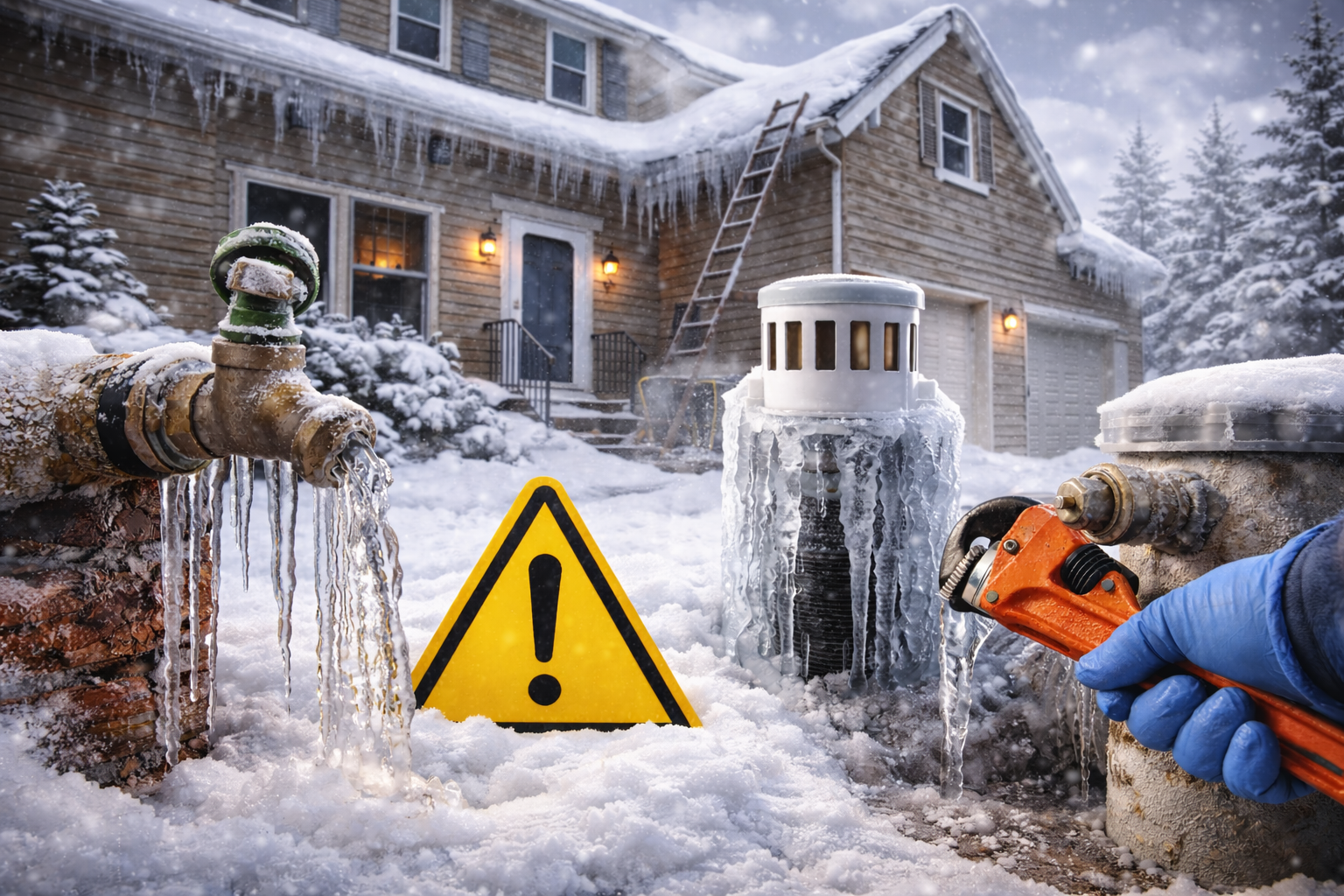
Why January Matters
New Year, new… cold snaps. In New Jersey, the first weeks of January often bring rapid temperature swings, hard freezes, and nor’easter rain/snow mixes. That combo is notorious for frozen pipes, attic leaks from ice dams, sump pump failures, and HVAC condensate surprises—all of which can lead to mold if not handled fast.
The January Checklist
- Find & Label Your Main Water Shutoff
Tape a big label and keep a wrench nearby. In an emergency, seconds count. - Drip At-Risk Faucets on Freeze Nights
Pencil-thin drip for sinks on exterior walls or over garages reduces freeze pressure. - Open Vanity & Kitchen Doors on Exterior Walls
Let warm room air circulate around supply lines. - Insulate the “Cold Zones”
Foam sleeves on exposed pipes; air-seal rim joists and penetrations (cable, hose bibbs). - Protect Exterior Hose Bibbs
Disconnect hoses, install insulated covers, and close interior shutoffs with bleeder drains open. - Test the Sump Pump
Pour a bucket into the pit; confirm fast discharge and a single “check-valve click” when it stops. Verify battery backup. - Clear Gutters & Extend Downspouts
Keep meltwater moving away from the foundation by 6–10 feet. - Attic Health Check
Look for dark sheathing stains, frosty nails, or matted insulation. Make sure soffit and ridge vents aren’t blocked. - Dehumidify Basements/Crawls
Keep indoor RH 40–55% to prevent condensation and musty odors. - HVAC Condensate Safety
Confirm the drain is clear, the float switch shuts the system off when lifted, and attic air handlers sit in a clean emergency pan—with a separate drain. - Place Leak Sensors
Under sinks, behind toilets and dishwashers, near the water heater, by the air handler, and at the sump. - Photograph Utilities & Valves
Take a quick video of mechanical rooms and ceilings—handy for insurance and faster service if there’s a loss.
January Risks—and How to Beat Them
1) Frozen & Burst Pipes
Hotspots: Over-garage bathrooms, exterior-wall vanities, crawl spaces, hose bibb lines, and long runs on the north/windward side.
Prevention:
- Air-seal first (drafts freeze pipes faster than cold air alone).
- Insulate exposed lines; add heat cable in extreme spots (follow manufacturer guidance).
- Maintain 55–60°F in seldom-used rooms.
If a pipe might be frozen:
- Open the faucet to relieve pressure.
- Warm slowly with a hair dryer or safe portable heater—start near the faucet and work back.
- Never use an open flame.
- If you suspect a split, shut off the main before thawing fully and call a plumber.
If water is already flowing:
- Kill power to affected circuits.
- Call AllStates Restoration for extraction and structural drying immediately to prevent mold.
2) Ice Dams on Roofs
When attic air warms the roof deck, snow melts and re-freezes at the eaves, forcing meltwater under shingles.
Prevention:
- Air-seal attic bypasses (around lights, fans, stacks) and add insulation to proper R-values.
- Clear soffit/ridge vents for continuous airflow.
- Use a roof rake from the ground after heavy snows.
If you see ceiling stains or “shadowing”:
- Don’t just paint over it—there may be wet insulation above.
- We’ll map the moisture with meters/thermal imaging, open only what’s necessary, dry to standards, and help you correct the attic conditions so it doesn’t return.
3) Sump, Seepage & Groundwater Surges
January thaws and rain-on-snow can overwhelm basements.
Prevention:
- Confirm discharge is clear and not frozen; add an ice guard/air gap near the exterior wall.
- Test the battery backup and label the breaker for the pump.
- Keep a restoration-grade dehumidifier at 45–50% RH to deter mustiness after storms.
If water enters:
- Document with photos/video.
- We’ll extract, disinfect where needed, and dry framing and wall cavities so you don’t fight odors all spring.
24–48 Hours: The Mold Window You Can Control
Mold can begin colonizing wet cellulose (drywall paper, wood, carpet pad) in 24–48 hours. The January rule is “source off, water out, dry down—fast.” Our teams set high-velocity air movers and LGR dehumidifiers, then verify with daily meter readings until wood approaches ≤~15% moisture content and drywall returns to baseline.
Start the year dry and stress-free.
AllStates Restoration is one call away—day or night.
Need a fast moisture audit or emergency help today?
Call AllStates Restoration at (732) 956-3900 or request service at hireasr.com.
We’ll protect your home, document everything for insurance, and get you back to warm and worry-free—fast.
Leave A Comment