Confirm source control
Verify the animal and active wildlife condition have been addressed by the proper professional.

SOURCE-BASED SKUNK ODOR CLEANUP
The animal is gone—but the odor remains? Trace the exposure. Clean the residue. Treat what remains.
After wildlife removal, AllStates evaluates skunk odor affecting indoor surfaces, contents, textiles, crawl spaces, garages and air pathways, then performs condition-appropriate cleaning and deodorization.


WILDLIFE REMOVAL COMES FIRST
Use a qualified wildlife-control professional to remove the animal, address access points and manage active wildlife hazards. AllStates begins indoor restoration after the source is controlled.
Do not mix bleach, ammonia, peroxide or other household chemicals. Uncontrolled mixtures can create harmful fumes and damage fabrics, flooring and finishes.
Call after the wildlife source is controlledWHY THE ODOR TRAVELS
Doors, windows, attached garages, crawl spaces, clothing, pets and HVAC pathways can carry highly odorous residue beyond the original exposure point.
DEODORIZATION FOLLOWS CLEANING
The primary restoration work is source control and material-appropriate cleaning. Deodorization may then address odor remaining in restorable surfaces, contents and air pathways. Treatment selection must consider occupants, ventilation, product labels and re-entry requirements.
THE SKUNK ODOR REMOVAL PROCESS
Verify the animal and active wildlife condition have been addressed by the proper professional.
Trace likely entry points, strongest odor areas, transferred residue and air pathways.
Define ventilation, work zones, contents handling and temporary access limitations.
Use surface- and textile-appropriate methods for affected building materials and contents.
Apply condition-appropriate treatment only after the included source residues are cleaned.
Inspect the authorized scope and explain ventilation, curing and follow-up expectations.
AREAS AND MATERIALS WE EVALUATE
CONTENTS & TEXTILES
Washable textiles may follow a controlled laundering process. Upholstery, leather, paper, unfinished wood and delicate contents require separate testing and may need off-site processing or replacement decisions.
See contents restorationHVAC & AIR PATHWAYS
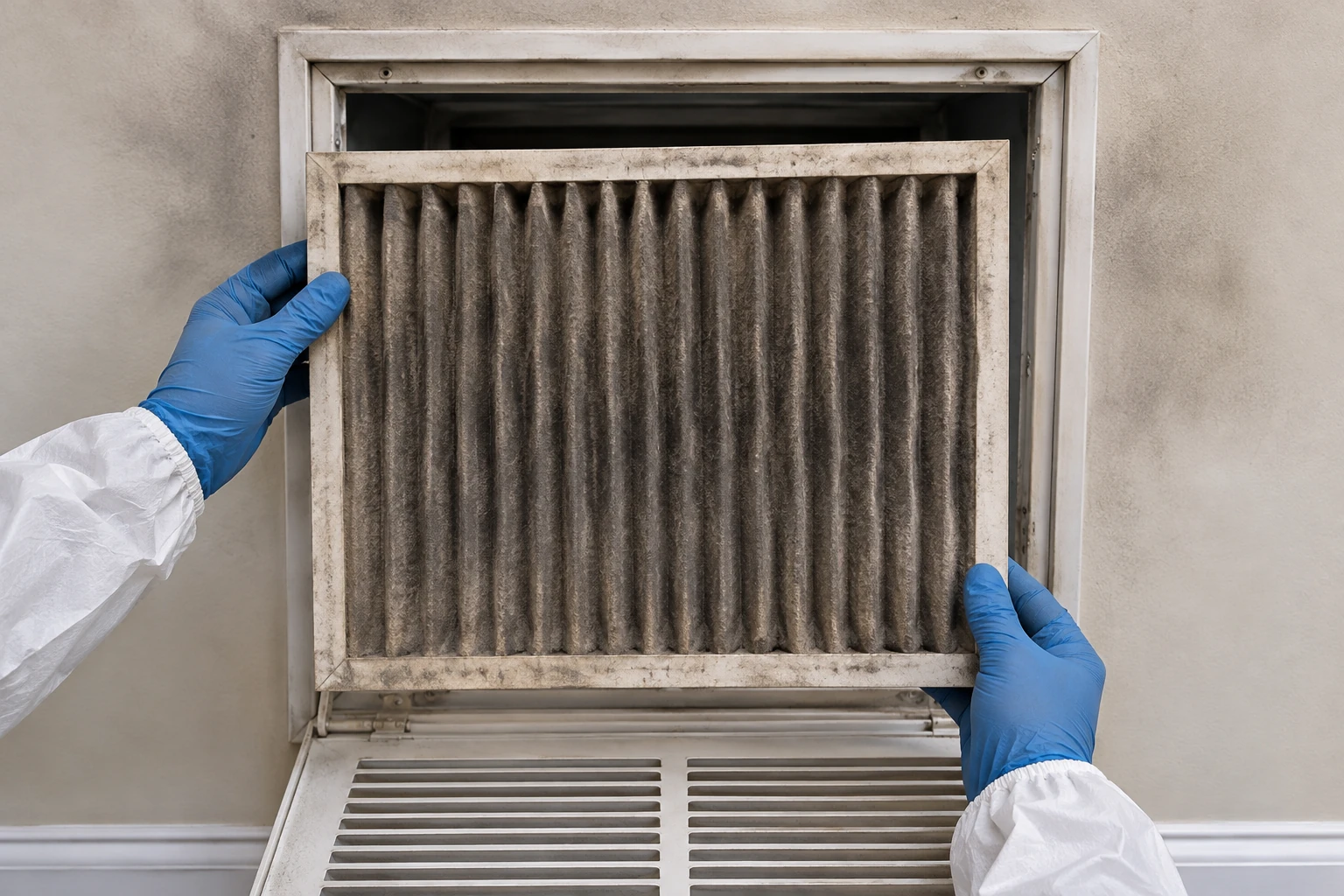
We evaluate whether the system was operating, where air entered, filter conditions, odor during operation and accessible component findings. HVAC cleaning is not automatically added to every project.
SKUNK ODOR QUESTIONS
No. Wildlife capture, removal and exclusion should be handled by an appropriate wildlife-control professional. AllStates addresses indoor residue, affected materials and persistent odor after the animal and active source are gone.
Skunk spray contains highly odorous compounds that can enter through doors, windows, crawl spaces, attached garages and air pathways. HVAC operation, fabrics and porous contents can distribute or retain the odor beyond the original location.
If the system appears to be drawing in or distributing the odor, turn it off when safe and contact a qualified professional. The system, filters, returns and accessible components should be evaluated before cleaning is added to the scope.
Some household methods may reduce odor on limited washable surfaces, but they can damage finishes, bleach fabrics or create unsafe mixtures. Persistent building odor requires source identification, material-specific cleaning and controlled deodorization.
Many items can be evaluated for material-appropriate cleaning and deodorization. Restoration potential depends on material, odor intensity, direct spray exposure and whether the item can be safely washed, treated or processed off site.
Timing depends on whether the source is gone, how directly the property was exposed, the number of affected materials, HVAC involvement and ventilation conditions. We explain the expected work sequence after assessment.
No responsible contractor should guarantee the result before the source, exposure and affected materials are known. AllStates defines the authorized scope, explains limitations and evaluates the result after cleaning and treatment.
REQUEST A SKUNK ODOR ASSESSMENT
Include whether the animal has been removed, whether a pet was sprayed, whether the HVAC was operating and which rooms, contents or exterior openings are affected.
CALL ALLSTATES RESTORATION732-722-5211THE ANIMAL IS GONE. THE ODOR DOES NOT HAVE TO STAY.