Assess
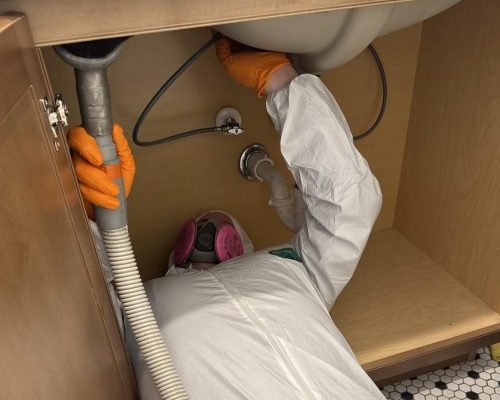
Document odor history, room conditions, prior cleaning and affected materials.

SOURCE-BASED PET ODOR RESTORATION
The carpet was cleaned—but the odor returned? Map the contamination. Reach every affected layer.
AllStates evaluates pet urine and persistent animal odors in carpet, padding, flooring, subfloor, baseboards and contents, then recommends cleaning, treatment, removal or trade coordination based on the actual material conditions.

DO NOT KEEP ADDING FRAGRANCE
Avoid mixing household chemicals, saturating wood or repeatedly wetting carpet without knowing what is underneath. These steps can spread contamination, damage finishes or create a second odor.
Keep pets and children away from wet treatment areas. Products, ventilation and re-entry times must follow the approved work plan and label directions.
Tell us which rooms are affectedFIND THE FULL CONTAMINATION BOUNDARY
We assess the history, strongest odor locations and material construction before deciding whether cleaning alone is realistic.
THE RIGHT EXPECTATION BEFORE WORK BEGINS
Limited surface contamination may respond well to professional cleaning and material-appropriate chemistry. Repeated saturation or deep penetration may permanently stain, swell or damage padding, wood and subfloor. We explain restoration potential and limitations before the scope is authorized.
MATERIALS THAT MAY HOLD PET ODOR
THE PET ODOR REMOVAL PROCESS
Document odor history, room conditions, prior cleaning and affected materials.
Identify likely contamination points and confirm findings against material conditions.
Lift or remove authorized finish materials when deeper layers require evaluation.
Remove contamination from restorable surfaces with material-appropriate methods.
Apply suitable residual-odor treatment, or coordinate sealing, repair or replacement.
Inspect the completed scope and explain curing, ventilation and follow-up expectations.
CARPET & UPHOLSTERY
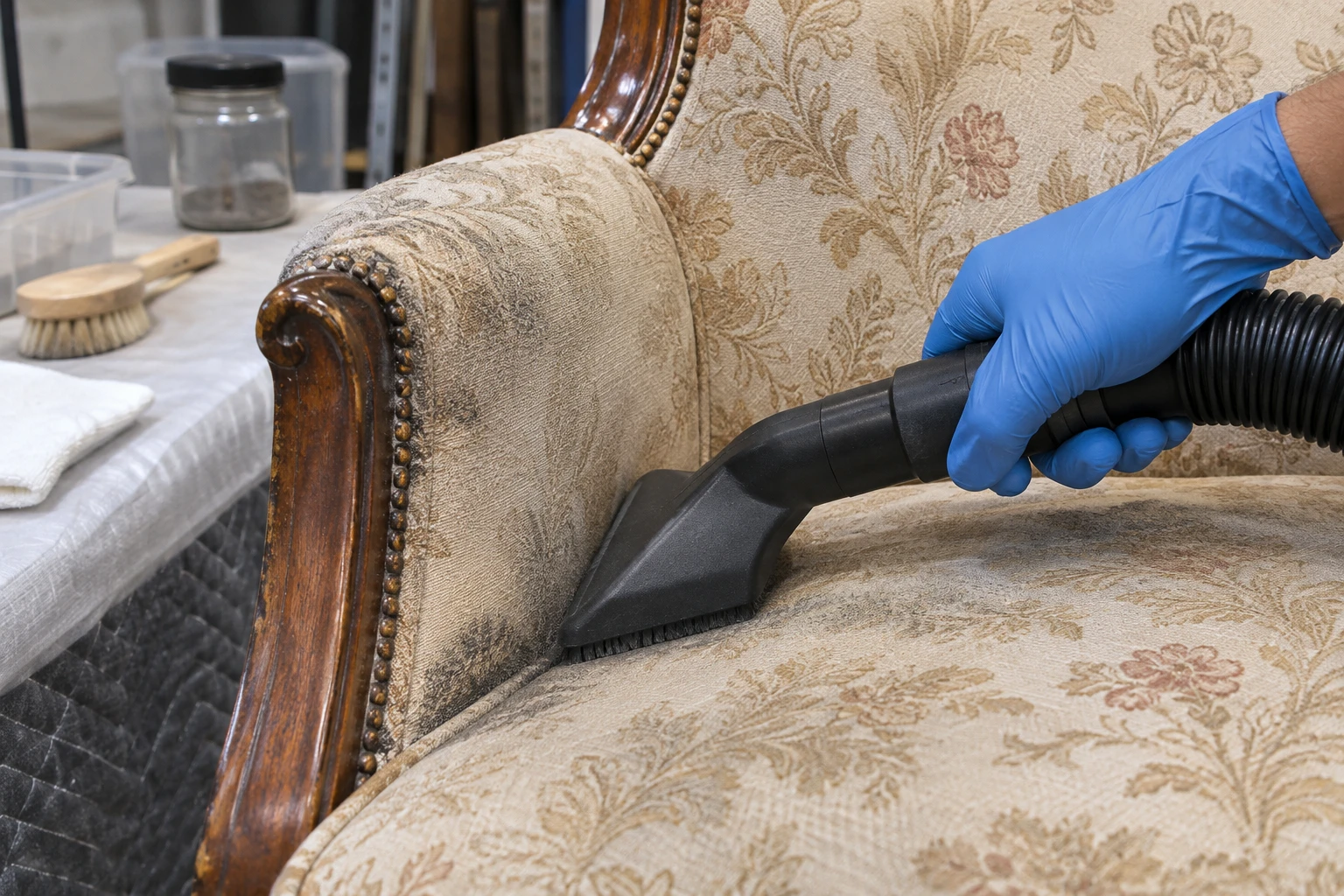
We evaluate whether the contamination is limited to cleanable fibers or has entered padding, backing, seams, furniture fill or framing. Removing affected porous material may be more reliable than repeated surface treatment.
WOOD & SUBFLOOR
Cleaning and treatment may be possible, but staining, swelling and deep penetration can require sealing, sanding, board removal or another qualified flooring trade.
PET ODOR QUESTIONS
Urine can pass through carpet into padding, tack strips, subfloor, baseboards or adjoining materials. Surface cleaning may improve the carpet while leaving deeper contamination that becomes noticeable again with humidity or temperature changes.
Sometimes. The answer depends on contamination depth, material condition, number of affected areas and prior treatments. Limited contamination may respond to professional cleaning; widespread or deeply affected porous materials may require removal.
The assessment may combine occupant history, odor tracing, visual inspection, UV inspection where useful, moisture or material evaluation and targeted testing. No single tool identifies every affected layer, so findings are confirmed against actual material conditions.
Results depend on the finish, board joints, penetration depth and subfloor. Some surfaces can be cleaned and treated; stained or deeply contaminated wood may require sanding, sealing, board removal or coordination with a flooring contractor.
No single product works in every material or condition. Enzyme or other chemistry may be appropriate after the affected area and material are identified, but chemistry cannot restore severely damaged or inaccessible porous materials.
The work plan should account for occupants, product labels, ventilation and required re-entry times. Pets and people may need to remain outside the treatment area until cleaning is complete and the area is ready for occupancy.
Yes. AllStates can assess homes, apartments, rental turnovers, offices and other properties. Larger projects may require room-by-room documentation, contents decisions, flooring coordination and phased work.
REQUEST A PET ODOR ASSESSMENT
Include how long the condition has existed, whether the same locations were affected repeatedly and what cleaning or flooring work has already been attempted.
CALL ALLSTATES RESTORATION732-722-5211DO NOT JUST COVER THE ODOR.