Investigate
Document odor locations, moisture history, visible conditions and suspected pathways.

MOISTURE-BASED ODOR INVESTIGATION
A musty smell is a clue—not a diagnosis. Find the moisture. Assess the material. Correct the condition.
AllStates investigates persistent musty odors, moisture pathways and affected materials, then develops the appropriate drying, cleaning, remediation and residual-odor treatment plan.
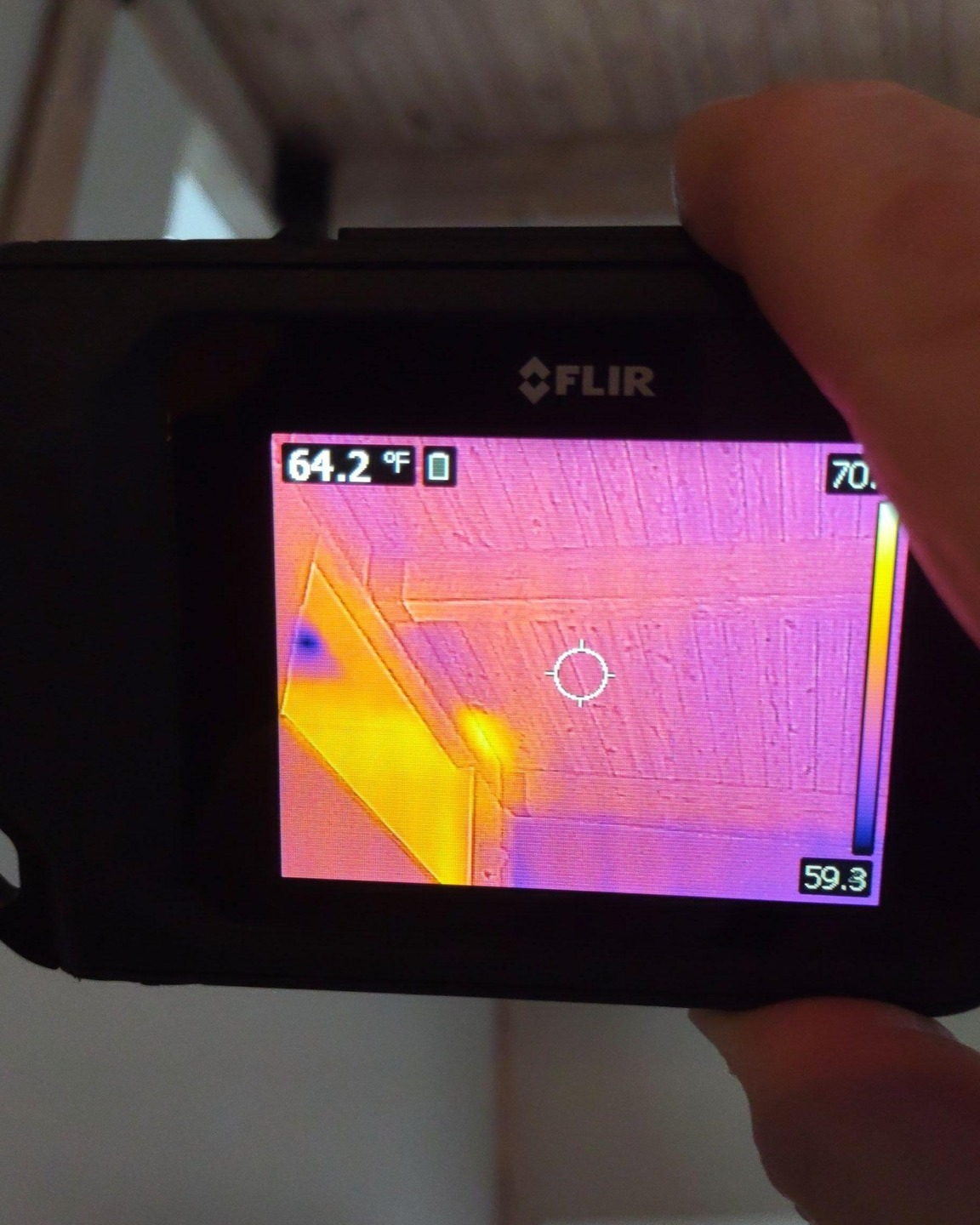

DO NOT JUST COVER THE ODOR
Avoid uncontrolled demolition, aggressive wiping or placing fans directly on suspected growth. Document visible conditions and correct an active leak when it is safe to do so.
Health concerns belong with a healthcare professional. AllStates evaluates building conditions and restoration needs; we do not diagnose medical conditions.
Describe what you smell and whereODOR IS EVIDENCE—NOT THE ENTIRE ANSWER
We combine the odor history with moisture readings, material conditions and likely air pathways to define the next step.
THE TERM “MILDEW” DOES NOT CHANGE THE PROCESS
People commonly use “mildew” for surface discoloration or a musty smell. We focus on the moisture source, affected material, extent and whether controlled remediation is needed.
DEODORIZATION IS NOT MOLD REMEDIATION
If microbial growth or damaged porous material is present, fragrance, fogging or ozone alone is not a corrective plan. Deodorization is considered only after the source-based restoration work is complete and the treatment is appropriate for the occupied property.
THE MUSTY-ODOR RESTORATION PROCESS
Document odor locations, moisture history, visible conditions and suspected pathways.
Coordinate leak repair, drainage, ventilation or humidity correction as appropriate.
Contain the area and remove or clean affected materials when mold remediation is required.
Dry materials and verify moisture conditions against reasonable comparison areas.
Clean included surfaces and use condition-appropriate residual-odor treatment when justified.
Evaluate the completed scope visually, by moisture condition and by defined project criteria.
COMMON HIDDEN-ODOR LOCATIONS
WHEN TESTING MAY HELP
Testing may help when the source is uncertain, a baseline or written protocol is needed, or the result would change the remediation plan. It is not automatically required for every musty odor.
Learn about mold testingWHEN CONDITIONS ARE CONFIRMED
When affected materials and moisture boundaries are established, the work may require containment, removal, detailed cleaning, drying and verification—not odor treatment alone.
See mold remediation servicesMUSTY-ODOR QUESTIONS
No. A musty odor can be associated with damp materials, elevated humidity, microbial activity or another concealed condition. Odor is a useful clue, but the moisture source and affected materials must be evaluated before the condition is diagnosed or treated.
Homeowners often use mildew to describe light-colored or surface growth. In property restoration, the important questions are what material is affected, why moisture is present and what cleaning, removal or moisture correction is appropriate.
Deodorizer may temporarily change the smell, but it does not correct moisture or remove affected porous materials. When mold or microbial growth is present, the source and affected materials must be addressed before residual odor treatment.
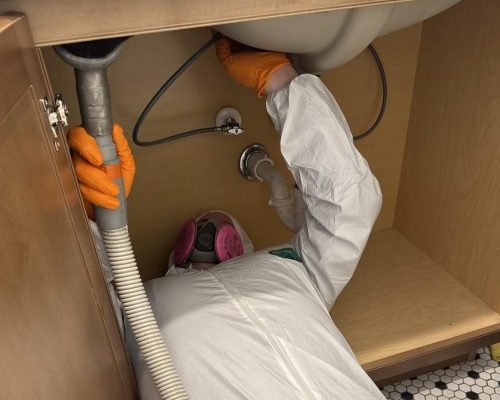
Common locations include basements, crawl spaces, attics, wall cavities, cabinets, flooring systems, HVAC pathways and materials affected by an earlier leak or incomplete drying.
Not always. Testing is useful when it will answer a specific question, clarify an uncertain source, establish a baseline or support a written protocol. A visual and moisture assessment is often the first step.
Results depend on the source, affected materials, drying conditions and hidden pathways. Some residual odor may diminish as materials dry and air is exchanged; additional cleaning or deodorization may be appropriate after remediation.
Yes. Commercial projects may require phased access, HVAC coordination, occupant communication, moisture documentation and work scheduling around operations.
REQUEST A MUSTY-ODOR ASSESSMENT
Include any known leak, flood, condensation or humidity history and whether visible growth or earlier testing exists.
CALL ALLSTATES RESTORATION732-722-5211DO NOT MASK A MOISTURE WARNING.