Assess conditions
Define moisture sources, access, safety concerns, affected materials and project criteria.

ATTIC MOLD & MOISTURE RESPONSE
Clean the affected materials. Correct the condition that allowed growth.
We investigate attic moisture, condensation, roof leakage, exhaust discharge and affected materials before defining containment, cleaning, removal and verification.

FIRST, DO NOT DISTURB THE ATTIC
Limit access until the attic can be evaluated. Do not scrape or spray visible growth, and do not enter an attic with unsafe access, electrical concerns, fire damage or uncertain structural conditions.
Record what you know. Note roof leaks, bathroom exhaust locations, recent insulation work, winter condensation, staining and odors.
Call and describe the attic conditionsATTIC MOLD IS A BUILDING-CONDITION PROBLEM
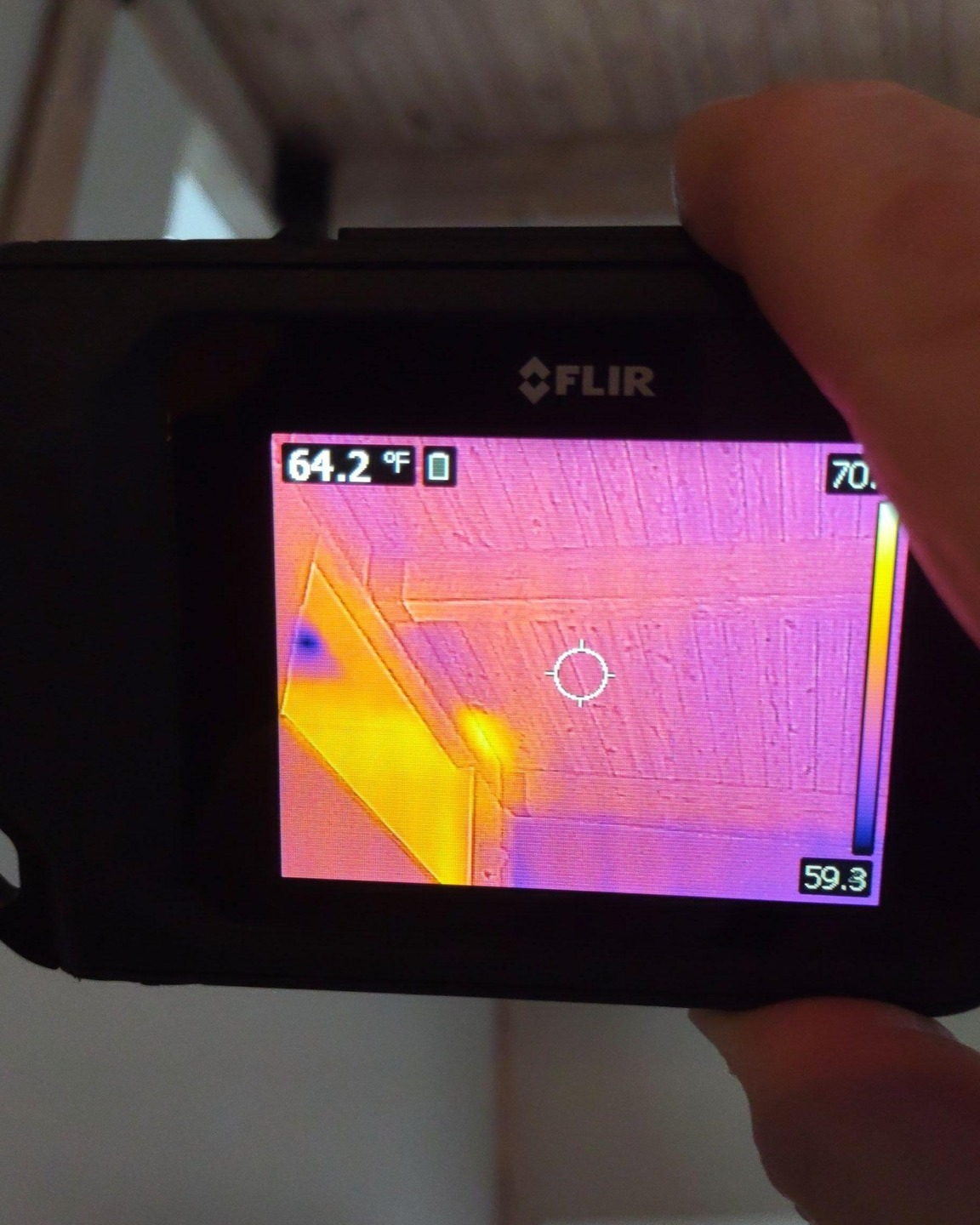
We evaluate how moisture entered or accumulated and whether the affected boundary extends beyond what can be seen from the access opening.
ASSESS BEFORE CLEANING
Attic growth can result from one localized leak or widespread seasonal condensation. The scope should reflect the actual pattern and material condition.
VENTILATION ALONE MAY NOT SOLVE THE PROBLEM
Adding vents without understanding the cause may leave the primary moisture pathway unchanged. We document the observed conditions and explain which corrections belong in the restoration scope and which may require a roofer, insulation contractor, HVAC professional or other specialist.
THE ATTIC MOLD REMEDIATION PROCESS
Define moisture sources, access, safety concerns, affected materials and project criteria.
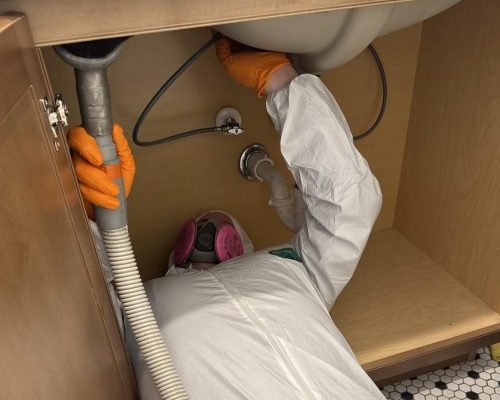
Plan access and protect occupied areas from dust and debris movement.
Use controlled access, containment and HEPA air management as appropriate.
Remove unsalvageable materials and clean suitable sheathing and framing within the scope.
Address or coordinate roof, exhaust, humidity, insulation and air-leakage corrections.
Review cleanliness, material condition and moisture against the established criteria.
A LIGHTER STAIN IS NOT THE ONLY MEASURE OF SUCCESS
Some cleaned wood may retain cosmetic staining. We evaluate the work area for visible growth, dust, debris, cleanliness and moisture—not appearance alone.
CONDITIONS COMMONLY FOUND WITH ATTIC MOLD
ROOFING, TARPING & COORDINATION
Depending on the conditions and availability, temporary tarping or stabilization may be completed by our team or coordinated with a qualified third party. Permanent roofing repairs are defined and coordinated separately.
TESTING WHEN IT ANSWERS A USEFUL QUESTION
Testing may support an unclear assessment, written protocol or verification criteria. We can also coordinate an independent professional when separation between assessment and remediation is important.
Explore mold testingATTIC MOLD QUESTIONS
Common contributors include roof leaks, bathroom or dryer exhaust discharged into the attic, air leakage from the living space, insufficient ventilation, cold roof sheathing and elevated indoor humidity. The cause must be evaluated before selecting the remediation scope.
Sometimes. The answer depends on the roof condition, moisture source and condition of the sheathing and framing. We assess the affected materials and coordinate roofing or ventilation work when it falls outside our restoration scope.
No. Roof leakage is one possible cause, but condensation and warm moist air entering a cold attic can create widespread growth even when the roof covering is not actively leaking.
Many structurally sound framing and sheathing surfaces can be remediated using controlled cleaning methods. Materials that are deteriorated, damaged or unsuitable for cleaning may require removal or repair.
Insulation may require removal when it is wet, contaminated, obstructs the work area or prevents inspection. Clean, dry insulation outside the affected scope may be protected and retained when appropriate.
Completion should include a visual review, cleanliness assessment and moisture evaluation against the project criteria. Independent post-remediation verification can be coordinated when requested or required.
Remediation removes or cleans affected material, but recurrence remains possible if roof leakage, exhaust discharge, air leakage, humidity or ventilation conditions are not corrected.
ATTIC MOLD ASSESSMENT & REMEDIATION HELP
Send the property location, visible condition, roof or exhaust history and whether anyone has already inspected, tested or treated the attic.
CALL ALLSTATES RESTORATION732-722-5211ATTIC MOLD CAN RETURN WHEN THE MOISTURE PATHWAY REMAINS.