Assess conditions
Identify the moisture source, affected boundaries, materials, access and project criteria.

DARK-COLORED MOLD & MOISTURE CONDITIONS
Do not make the decision by color alone. Find the moisture. Define the boundary. Remediate the conditions.
We evaluate dark or black-colored growth, moisture sources, affected materials and surrounding areas before establishing the appropriate containment, removal, cleaning and verification scope.

FIRST, AVOID DISTURBING THE AREA
Do not sand, scrape, demolish, aggressively clean or place fans directly on suspected growth before the area is evaluated. Photograph visible conditions and address active water when safe.
Do not rely on appearance to identify the mold. Dark growth may involve different organisms, residues or material changes that require inspection or sampling to distinguish.
Call and describe the conditionsBLACK IS A COLOR—NOT A COMPLETE SCOPE
We look beyond the visible patch to understand the moisture, materials and possible movement through adjoining spaces.
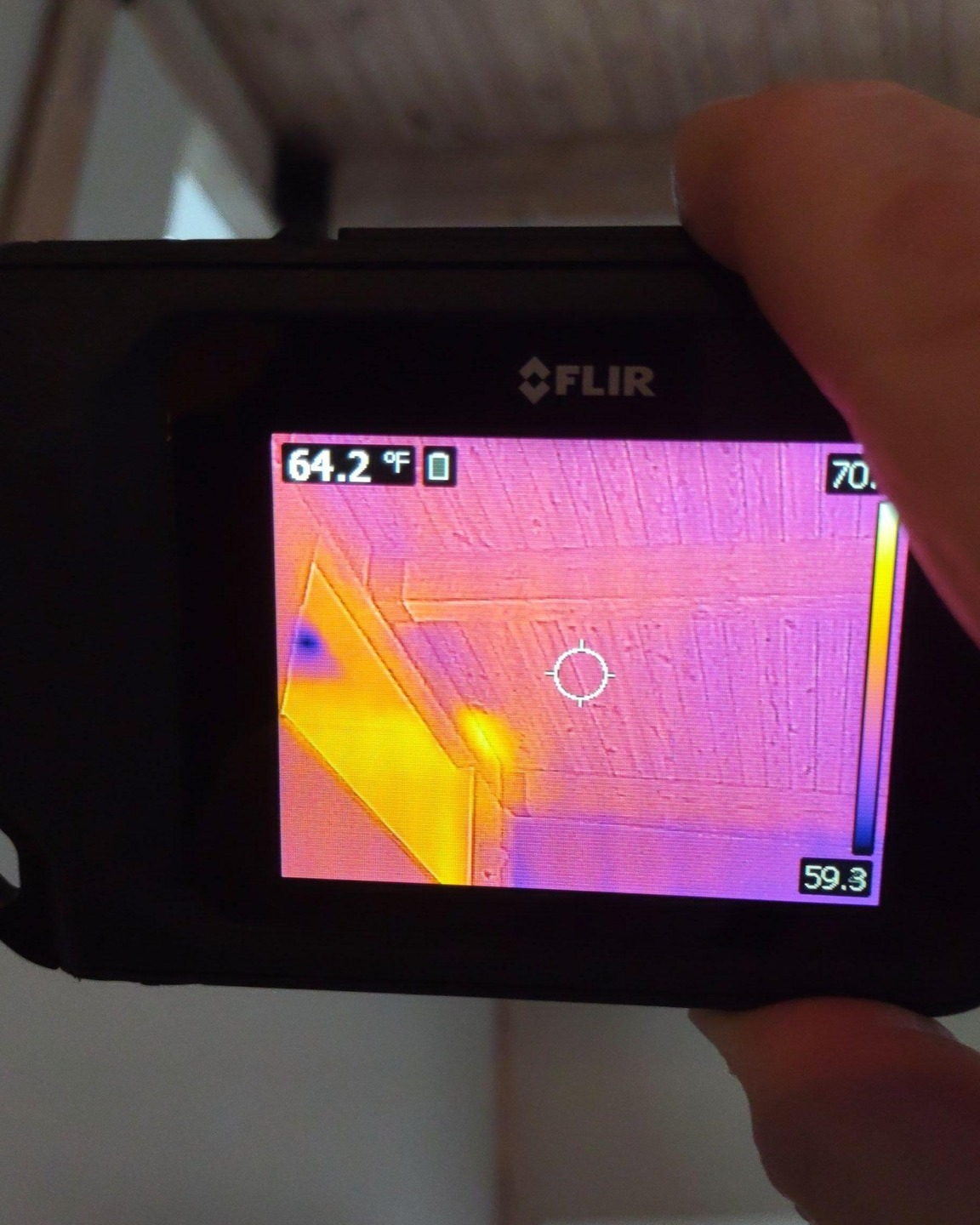
FOLLOW THE MOISTURE—NOT ONLY THE COLOR
We evaluate the source, damp materials, comparison areas and building assemblies that may conceal additional conditions. Testing is selected only when it will answer a useful question.
WHAT ABOUT STACHYBOTRYS?
Stachybotrys is one type of mold associated with persistently damp cellulose-containing materials, but not every black-colored growth is Stachybotrys. When identification matters to the project decision, appropriate sampling and laboratory analysis should be used within a defined assessment plan.
THE BLACK MOLD REMEDIATION PROCESS
Identify the moisture source, affected boundaries, materials, access and project criteria.
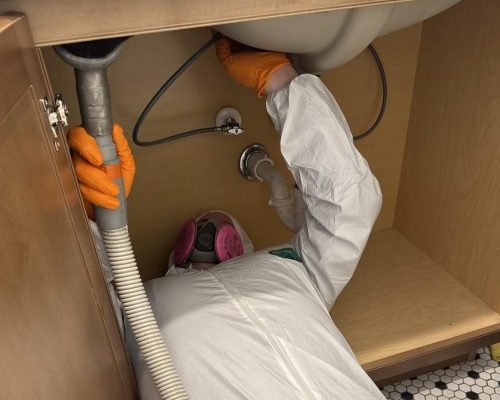
Establish controlled access, containment, pressure management and HEPA air filtration as appropriate.
Remove unsalvageable porous materials using methods intended to limit spread beyond the work area.
HEPA vacuum and clean remaining structural surfaces and included contents according to the scope.
Dry affected materials and coordinate correction of leaks, humidity, condensation or drainage conditions.
Complete visual, moisture and applicable sampling checks against the established criteria.
COMPLETION REQUIRES MORE THAN A CLEAN-LOOKING SURFACE
Verification may be performed through our quality-control process or by an independent professional when formal separation is requested or required.
COMMON BLACK MOLD LOCATIONS
TEST WHEN THE RESULT WILL CHANGE THE DECISION
Testing may be useful for species identification, an unclear condition, a baseline, written protocol or post-remediation criteria. Inspection and moisture findings remain essential context.
Explore mold testingPROPERTY CONDITIONS—NOT MEDICAL DIAGNOSIS
We do not diagnose illness or determine whether symptoms were caused by mold. Occupants with health concerns should consult an appropriate healthcare professional.
BLACK MOLD QUESTIONS
No. Mold color alone cannot reliably identify a species. Several types of growth may appear black or dark, and appearance can change with the material and conditions. Identification requires appropriate sampling and laboratory analysis when species identification would change a decision.
The remediation approach is based on moisture, affected materials, extent, location, air pathways and project criteria—not color alone. Containment, controlled removal, HEPA air management, detailed cleaning and moisture correction are selected for the actual conditions.
Household bleach is not a complete remediation strategy, particularly on porous building materials. Aggressive wiping can disturb growth, and surface appearance does not confirm that damp or affected material has been addressed.
Not always. When growth and the moisture source are visible, testing may not change the need for remediation. Testing is useful when identification, a baseline, a written protocol, an unclear condition or formal verification is important.
Yes. Growth can occur wherever suitable materials remain damp, including wall cavities, flooring assemblies, cabinets, insulation, attics, basements and crawl spaces. The inspection should follow the moisture history and building construction.
We recommend an independent professional when formal separation between remediation and verification is important. Customers may also choose our project quality-control checks, which are not represented as independent clearance.
No. We evaluate and remediate property conditions and do not diagnose health effects or determine whether symptoms were caused by mold. Anyone with health concerns should consult an appropriate healthcare professional.
BLACK MOLD ASSESSMENT & REMEDIATION HELP
Send the affected location, moisture or leak history, how long the condition may have existed and whether testing or earlier remediation has already occurred.
CALL ALLSTATES RESTORATION732-722-5211DARK COLOR DOES NOT DEFINE THE ENTIRE PROBLEM.